 EcoSmart Stud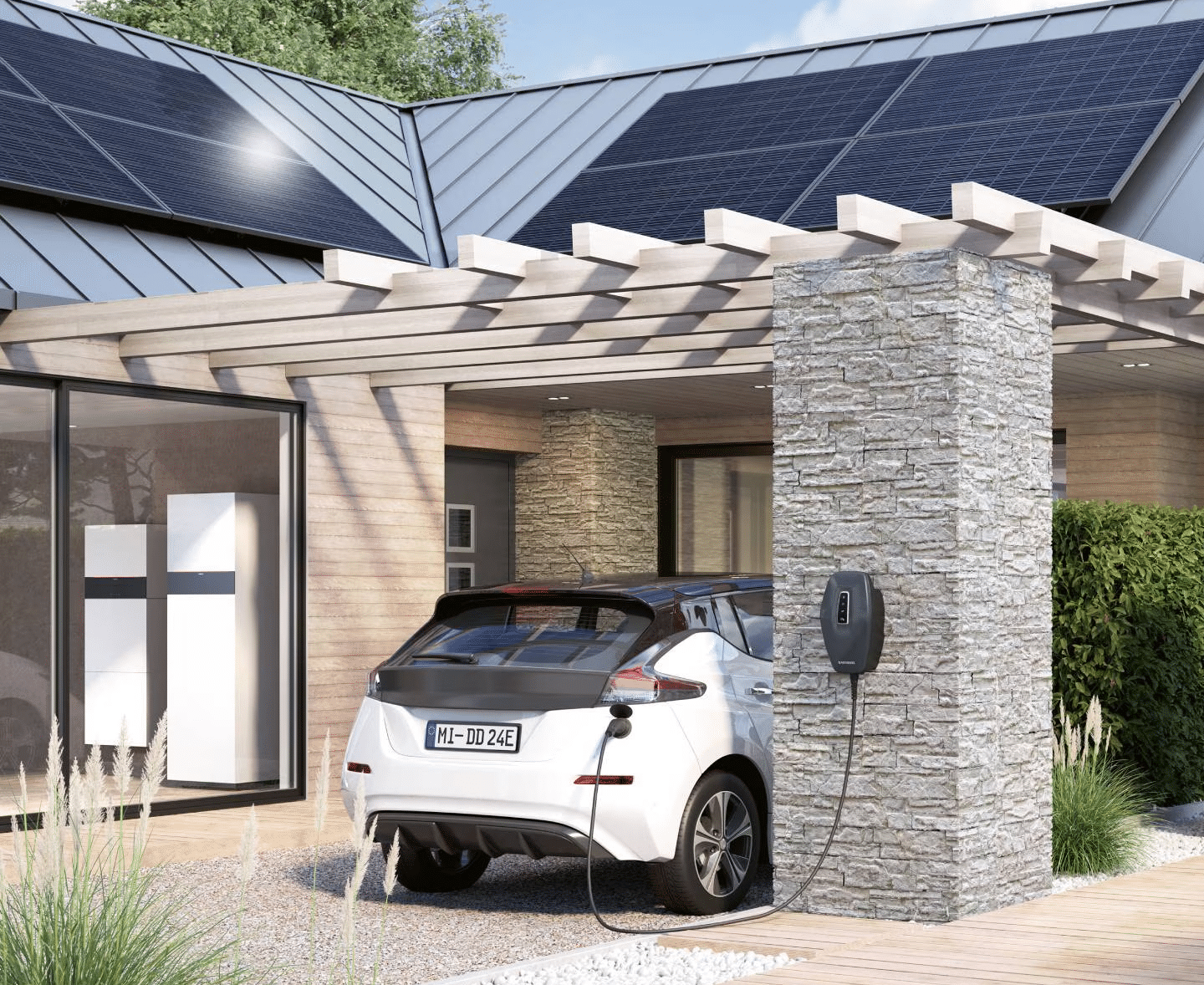
How Solar-Powered Homes Shrink the Real Cost of Driving
In our last article, we drew a clear line between national energy independence and household energy independence – and why only one of them actually puts money back in your pocket. Today, we go one step further: personal energy independence.
This is the moment your home does not just save energy – it generates it. And when that energy powers your car, you have fundamentally changed the economics of how you drive.
When the Meter Runs Backwards
The HERS Index (Home Energy Rating System) scores a home’s energy performance. A standard new home scores around 80. Zero means net-zero. But increasingly, high-performance new homes are achieving negative HERS scores – they produce more energy than they consume. That surplus can go back to the grid, or directly into the battery of an electric vehicle parked in your garage.
A home with a negative HERS score is no longer just efficient — it is a personal power plant.
Electric Cars Already Cost Less to Fuel. Solar Shrinks That Cost Further.
Even when charging from the grid, electric vehicles cost significantly less per mile than gasoline-powered vehicles. According to the Bureau of Labor Statistics Consumer Expenditure Survey, the average American household spent approximately $2,400 on gasoline in 2024 alone. EV owners charging from the grid typically cut that figure in half or more.
Adding solar capacity to support EV charging does carry an upfront cost – typically 4 to 6 additional panels on a new array. But spread over 30 years, that incremental investment shrinks to nearly nothing. The math becomes striking when you compare it against what the average American actually spent at the pump over the last three decades.
Based on EIA annual average gas prices from 1995–2024, at 14,263 miles driven per year and 24.4 MPG (U.S. DOE averages), the typical American driver spent over $42,134 on gasoline over 30 years — ranging from under $620 in cheap-gas years to over $2,309 per year when prices spiked. That figure does not include what the next 30 years will cost.
Solar does not eliminate the cost of driving. It trades a large, volatile, decades-long fuel expense for a small, fixed, one-time investment in a few additional panels – and that trade is one of the most financially sound decisions a new home buyer can make.
Price Shocks Cannot Reach You Here
Gas prices spike with geopolitical events, refinery disruptions, seasonal demand, and policy shifts. Grid electricity rates can follow. A homeowner dependent on either is exposed to forces entirely outside their control. The last 30 years of price history prove the point — from $1.06 a gallon in 1998 to nearly $4.00 in 2022, with no predictable pattern in between.
The solar-charged EV household is insulated from both. Your incremental fuel cost was largely set when the panels were installed. Whether gas hits $4 a gallon or $7, your commute costs do not change.
The Wall Assembly Is the Foundation
None of this works without an efficient thermal envelope for a home. Solar panels on a leaky, poorly insulated home are fighting an uphill battle — generating power only to lose it through thermal bridging, inefficient HVAC, and air infiltration.
High-performance wall assemblies — like those built with EcoSmart® Studs — dramatically reduce the load the solar system has to offset. A smaller load means fewer panels are needed to achieve the same negative HERS score.
The wall comes first. The solar panels finish the job.
National energy independence did not lower your bills. Household energy independence can. Personal energy independence locks in that advantage — for your home, your car, and your financial future.
Learn how EcoSmart® Studs are helping builders achieve negative HERS scores across Minnesota and beyond.
Sources: Bureau of Labor Statistics Consumer Expenditure Survey (2024); U.S. Energy Information Administration annual average retail gasoline prices (1995–2024); Federal Highway Administration average vehicle miles traveled; U.S. Department of Energy vehicle fuel economy data.
EcoSmart® Studs | ecosmartstud.com | Wealth Builders Series